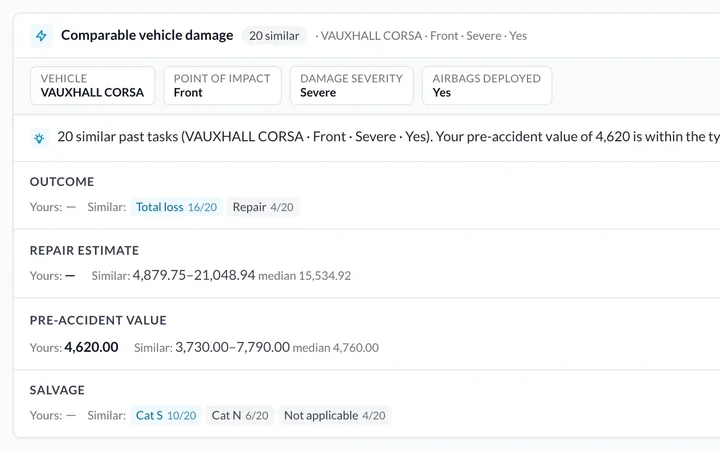
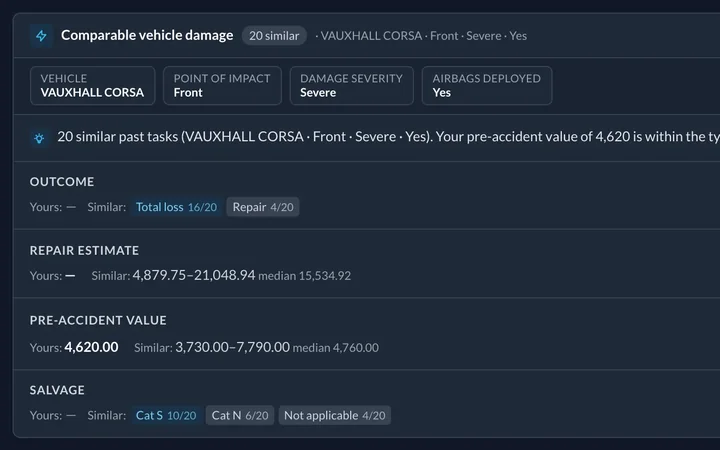
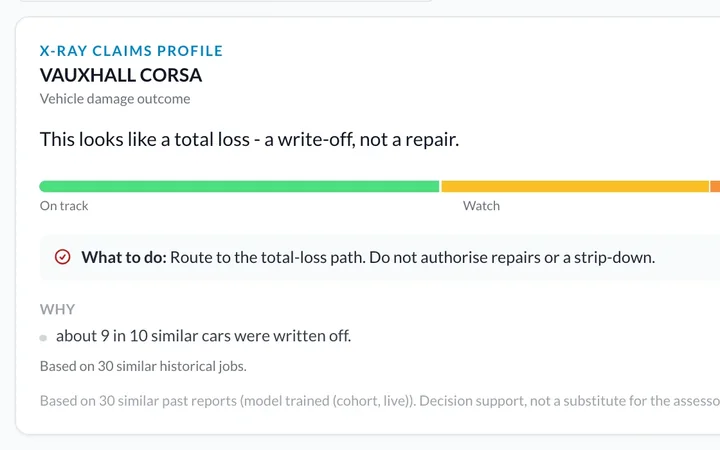
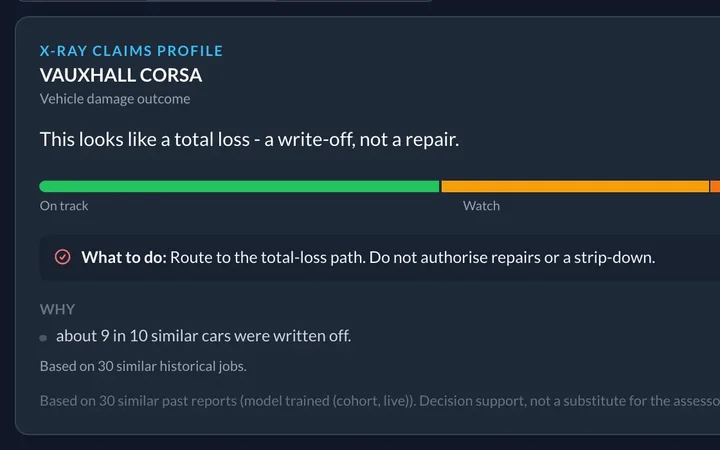
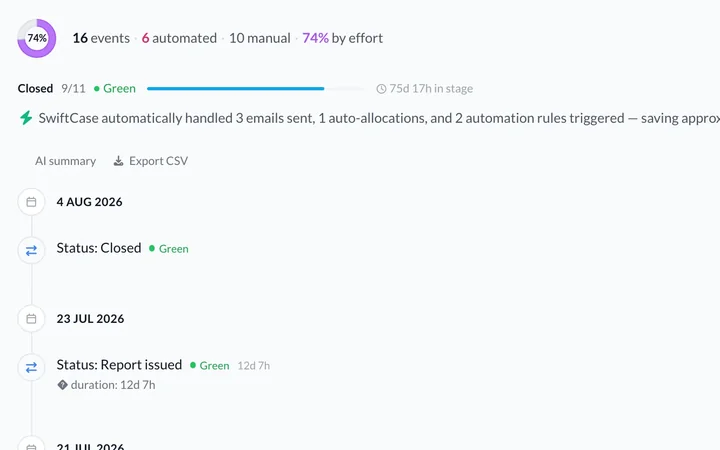
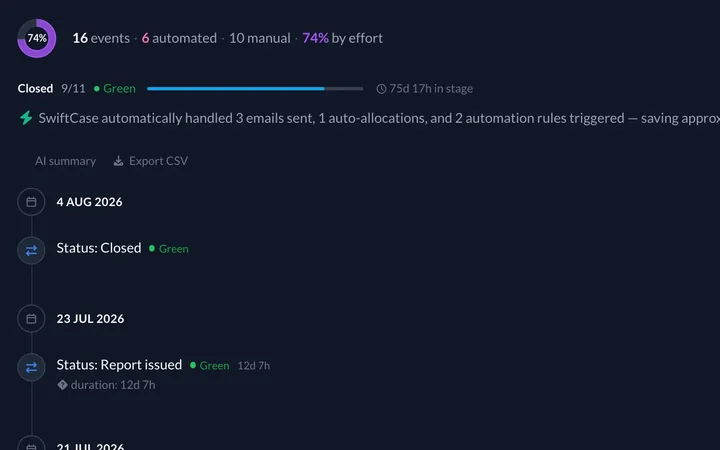
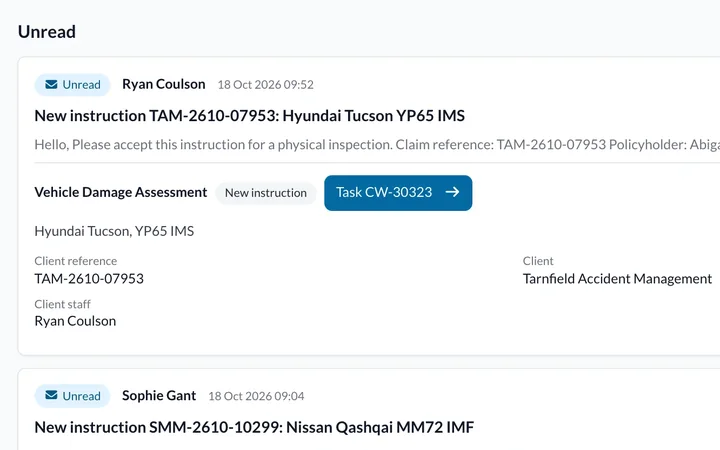
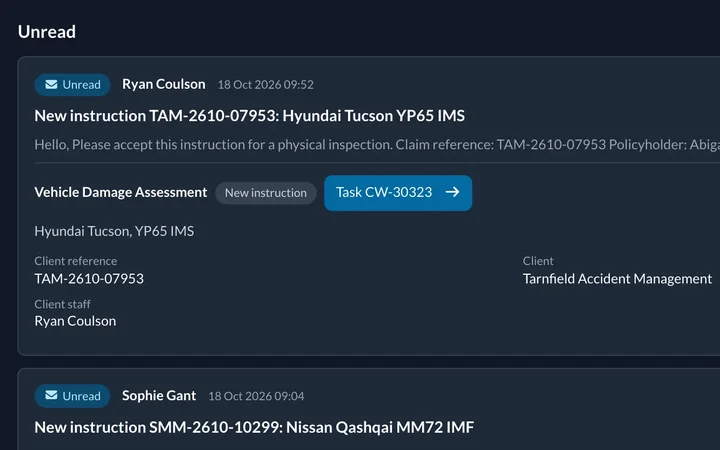
Your operation already knows the answer, because it's in the cases your people closed, the calls they made and the reasons they gave. SwiftCase puts that to work. Today that means precedent beside every case and a steer on where it's heading; next it means an assistant that can act on your behalf; and either way the reasoning is kept for the day someone asks.
Live now, on every plan
These are five things people ask on every case, answered from your own record rather than from memory, and every one of them is in production today.
What we're building now
This is the next step, written as the next step. Nothing here is available today, none of it is dated, and all of it lands on the changelog when it ships.
Next
Its hands are the actions you've already configured, so it can move a case, update a record or start a workflow the way your own process does, and its memory is your own record. It proposes and a person approves, and we're building it on the platform upgrade that's underway now.
Next
When someone overrides a rule, handles an exception or approves something above the usual limit, the moment to capture why is the moment it happens. Precedent then carries the reasoning as well as the result, and an audit becomes a lookup rather than an excavation.
Next
The things nobody writes down, like how this client likes it done, what was quoted last time, or why this has to happen before that, get kept where the work is, scoped to the product, the client or the case, and they show up when they're relevant rather than sitting in a wiki nobody opens.
Where it goes
This is the direction, and it's labelled as direction. Every case closed teaches the next one something, the reasoning stays in the building when people leave it, and the software starts to notice what a good operations manager notices and to say so before anyone asks.
Why it knows your business
A general assistant has read the internet, but it hasn't read your cases, it doesn't know your process and it can't act inside it. Everything on this page comes from the two things only you have.
It's your workflow, your fields and your vocabulary rather than a template you adapt to, which is why it reads for what you would look for and acts the way you would.
Precedent and outcome come from the cases your firm closed rather than from a benchmark assembled from someone else's, so it knows your business because it's made of your business.
It's hosted here, Cyber Essentials certified, and every action is on record, so what the software did is as auditable as what a person did.
Who it's for
It's for firms whose work is high volume, configured to how they do it, and has to be defensible when someone asks, which is true of assessment, inspection, surveying, diagnostics, care coordination, legal work and carbon accounting alike. The trades differ, and the question on every case is the same.
Including the one about what is real.
Both, and this page says which is which. Precedent search, the outcome steer, the timeline, document extraction and drafting are live for every client on every plan. The assistant that acts, decision capture and the knowledge base are what we are building next. We publish what ships on the changelog, so you can check the seam yourself.
No. Reading paperwork and drafting replies work from the first case, because they are set up to your documents rather than trained on your history. Precedent and the outcome steer get better as your record builds, which happens just from your team doing their jobs.
Your people. Today it shows precedent and a steer, and a person makes the call. The assistant we are building proposes an action and waits for approval; it does not have the last word, and the things it does are on the record like everything else.
Hosted in UK data centres, on infrastructure that is Cyber Essentials certified, under your control. Reading paperwork and drafting send the text they work on to the AI provider (OpenAI or Anthropic), which processes it. Nothing about your cases is used to train anything for anyone else.
Any firm whose work is high volume, configured to how they do it, and has to stand up afterwards. That includes vehicle and property assessment, fire safety and other inspection regimes, surveying, diagnostics, care coordination, possession and other legal work, and carbon accounting. If the question you keep asking is how did we handle one like this, it is for you.
Bring a real case to the demo. We'll show you what it already knows about one like it, and be straight about what comes next.